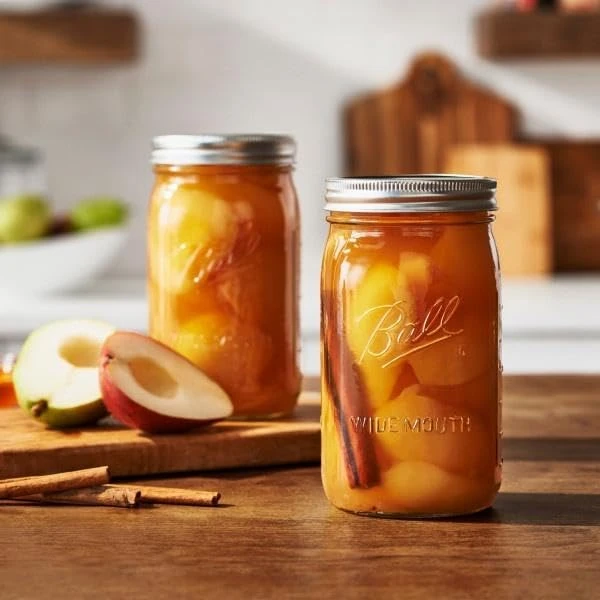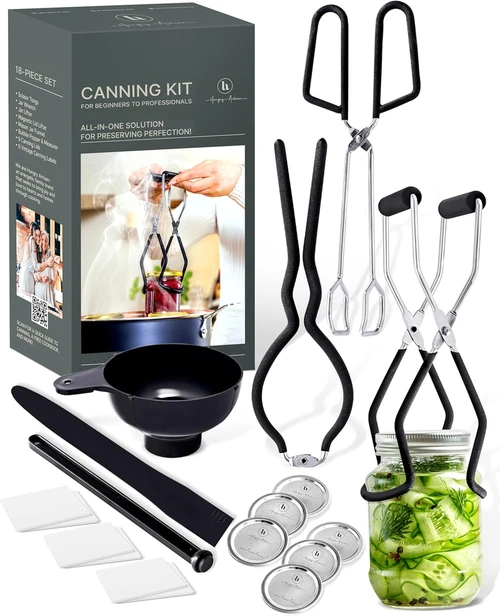
By the last week of September my kitchen counter stops being a counter. It's a tomato staging area — Romas in one bowl, a heap of jalapeños and two onions crowding the cutting board, and the big enamel canner already warm on the back burner because it was out for pickles over the weekend anyway. This is the picture nearly every home preserver sends me wrapped around the same question: Can you water bath can salsa?
Yes. And that flat "yes" is exactly where the risk lives, because it sounds unconditional and it is not. Salsa is the one preserved food where the two safety variables that normally travel together — acid and jar-filling — split apart. A jar of pickles is, at heart, a chemistry problem: prove the vinegar, hold the pH below the acid line, and the water bath's 212°F is plenty. Salsa adds a physics problem on top. It's a chopped, dense mixture, and heat has to actually reach the coldest point at the center of what you packed, by conduction, through whatever thickness and chunk size you loaded into the jar. Acid you can taste. Heat penetration you cannot.
So here's the trap: salsa looks like pickling — an acidic-ish vegetable jar — and behaves like pressure-canning territory — dense, low-acid chunks. The entire job of this page is to be the gate between those two mistakes.
The two-variable problem: acid and physics
Let me take them one at a time, because conflating them is how good cooks get hurt.
The acid side. The line is 4.6. Anything at or below pH 4.6 is acidic enough that boiling-water processing can make it safe; anything above it is a low-acid food, and Clostridium botulinum spores survive a 212°F bath. This is why the tested recipes never let you "add tomatoes to taste." Modern tomato varieties have drifted less acidic than the heirlooms the old family recipes were written around, which is why every tested tomato product carries added acid rather than trusting the fruit. If you want the full picture on that drift and how to manage it, read how to can tomatoes — I don't re-derive it here.
The physics side. Water-bath heat reaches the center of a jar by conduction through the contents, and the rate depends on density, chunk size, and the vegetable-to-liquid ratio. Add flour or cornstarch and you've changed the medium the heat has to travel through — you have thickened the very thing the tested time was measured against. Pack extra peppers or onions and you've changed the ratio the time assumed. The tested processing time is not a property of salsa in the abstract; it's a property of one specific measured mixture. Change the mixture, and the tested time stops being your time. For the method theory behind water bath versus pressure, see water bath vs pressure canning.
The tested path — the only salsa that earns a pantry shelf
Everything else on this page is a fallback. This section is the goal. Three checks, and a jar has to pass all three before it goes near a boiling-water canner.
Check 1 — Recipe. Is it a published, tested salsa recipe, with the vegetables, acids, and thickener limits stated as written? This is the hard gate. A blog recipe, a family card, "my grandma's" — these fail here, full stop, not because anyone was careless but because they were written for taste, not for heat penetration. The tested recipes live in the USDA Complete Guide to Home Canning and on the NCHFP site. Use them exactly as printed.
Check 2 — Acid. The tested recipe specifies a bottled acid in a stated amount. For tomatoes processed on their own, the acidification standard is 1 tablespoon bottled lemon juice or 0.25 teaspoon citric acid per pint, and 2 tablespoon bottled lemon juice or 0.5 teaspoon citric acid per quart (that's the tomato acidification figures we cite site-wide). The word that matters is bottled: bottled lemon juice has a standardized, predictable pH, while fresh-squeezed drifts jar to jar and season to season. The 5%-acidity vinegar reference applies too — use vinegar labeled 5% acidity, never a homemade or "wine" vinegar of unknown strength. The tested recipe's numbers are the ceiling and the floor at once. Match them.
Check 3 — Fill. No thickeners — no flour, no cornstarch, no tomato paste beyond what the recipe specifies. No "extra veggies to taste." Headspace matters here: the USDA standard for fruits and tomatoes, which covers salsa, is 0.5 inch — the full table lives in what is headspace in canning — though if the tested recipe on file specifies its own headspace, that recipe wins. The USDA Complete Guide to Home Canning and the NCHFP are the sole authorities I trust on this — their published recipe carries the amount, the ratio, and the process time, and you use it exactly as written, adjusting only for altitude.
I want to be blunt about that last point: the tested recipe on file with USDA/NCHFP specifies the amount, the ratio, and the time. I am deliberately not printing a single universal "salsa time" here, because there isn't one — different tested salsas carry different times precisely because their densities differ. The published recipe is the measurement. Follow it.
Process time adjusts for altitude — water boils cooler as you climb, so low-acid and acidified foods both need more time or more pressure up high. That adjustment schedule lives in USDA canning guidelines explained; work from it, don't estimate.
How many jars is this batch, anyway?
Packing density is where the tested path gets practical, because you need to know what a batch actually yields before you commit a Saturday to it. Tomatoes pack at roughly 2.75 pounds per quart; peppers come in around 1.25 pounds per quart. When your bowl of chopped tomatoes and peppers is staring back at you and you're wondering whether it's six pint jars or twelve, run the numbers rather than guessing — the calculator below turns pounds of produce into a jar count using those densities, pint rounding included. It won't tell you whether your salsa is safe to can (only the tested recipe does that), but it will tell you how much of it you just made.
Why "just pressure can it" is not the escape hatch
Here's the counter-intuitive part, the one I most want to sit with you for a minute.
The natural instinct, once you hear "low-acid density problem," is to reach for the pressure canner. After all, we tell you pressure canning is non-negotiable for low-acid foods — green beans, corn, meats. So why won't it rescue an arbitrary salsa?
Because a pressure canning time is a published answer to a specific, measured question. Green beans in pints at 11 lbs dial gauge for 20 minutes — that number exists because someone measured how long heat takes to reach the center of that defined product at that density and jar size. Corn, similarly. The times are answers precisely because the variables were fixed.
An arbitrary home salsa has no such number, because its density was never measured by anyone but you. You cannot time a variable you never measured. There is no "pressure can salsa for X minutes," and anyone who prints one is inventing it. This is exactly why NCHFP, for home mixtures that don't match a tested spec, points you to the freezer or to commercial salsa in a jar — not to the pressure canner. If you want the worked example of how a real pressure-canning time is built and why it only applies to its own defined food, read the green beans canning guide.
The honest fallbacks are four: the tested recipe, the freezer, the fridge, or a store-bought jar. The pressure canner is not a fifth.
The freezer branch — the honest default
Since I just handed you "freezer" as a legitimate answer, let me actually sell it, because I think it's undersold.
Frozen salsa keeps its flavor and texture for winter cooking in a way canned salsa rarely does — the chunks stay chunks instead of going soft. It takes minutes to put up: chop, mix, portion, freeze. And it skips the entire density gamble, because you are never asking heat to penetrate a sealed jar at all. Make it mild or fiery, thicken it if you like, add corn and black beans, taste as you go — none of those liberties break a safety rule when the jar is going into the freezer instead of onto a shelf. Start with freezing vs canning vs dehydrating for the method, and if tomatoes are the bulk of your batch, freeze tomatoes without blanching is the fastest route from counter to freezer.
The Frugal Organic Mama position is this: the frugal win is the safe jar, not the canned jar. Freezer salsa is not the consolation prize. For most of us, most years, it's the better one.
The failure list you can taste
Most blog-recipe red flags are visible in the ingredient list before you ever boil water. Here's the quick diagnosis, mapped to the variable each one breaks:
- Flour or cornstarch added to thicken → breaks physics. You've changed the medium heat travels through, so the tested time no longer applies.
- "Add extra veggies to taste" → breaks physics. You've changed the vegetable-to-liquid ratio the density was measured at.
- Oil or butter "for richness/trick" → breaks physics and safety. Fat coats the mixture and can interfere with heat transfer and seal integrity; tested recipes don't call for it.
- "Process by feel" or a made-up time → breaks everything. There's no tested anchor, so the jar is untested by definition.
- Fresh-squeezed lemon juice at random amounts → breaks chemistry. pH drifts, so the acid line isn't guaranteed.
If a jar you did process by the tested book comes out with a failed seal, that's a different problem — jump to canning troubleshooting. But when the recipe itself is the red flag, no troubleshooting saves it. Freeze it.
The three-check recap
| Check | What passes → pantry shelf | What fails → fridge or freezer |
|---|---|---|
| Recipe | Published USDA/NCHFP tested salsa, followed exactly | Blog, family, or invented recipe |
| Acid | Bottled lemon juice or 5% vinegar at the stated amount (1 tbsp / 0.25 tsp citric per pint; 2 tbsp / 0.5 tsp citric per quart for tomatoes) | Fresh-squeezed juice, unmeasured or "to taste" |
| Fill | No thickeners, no extra veggies, 0.5-inch headspace per spec | Flour, cornstarch, extra veg, guesswork |
Restating the frame one more time, because it's the whole page: pickles are a chemistry problem — prove the acid and the bath is enough. Salsa adds a physics problem — heat has to actually reach the middle of what you packed. One of those variables you can taste. The other you cannot. That is why the tested salsa list is short and the freezer list is long, and why getting the safe jar right is worth far more than getting a canned jar at all.
When you're ready to work through a batch, start at our harvest and preservation hub and let the calculator tell you what your counter actually produced. If you're drawn to this whole category because pickling felt like a beginner's win, the fork map is worth your time — pickles are the simpler chemistry, and how to can pickles shows you exactly where the two paths divide. And because I know cost is part of every family's decision here, the real math on whether home canning saves money lives in the cost of canning — the honest answer there, like the honest answer here, is that the safest and the frugal choice usually turn out to be the same one.
Frequently Asked Questions
Q: Can you water bath can homemade salsa? A: Yes — but only from a published, tested salsa recipe followed exactly as written, because a tested recipe guarantees the finished jar sits at or below pH 4.6 and was timed for one specific density. The acid spec for tomatoes is 1 tablespoon bottled lemon juice (or 0.25 teaspoon citric acid) per pint and 2 tablespoon bottled lemon juice (or 0.5 teaspoon citric acid) per quart. A blog, family, or invented recipe fails the gate by construction — it was written for taste, not for heat penetration.
Q: Why is canning salsa considered risky when pickling is basic? A: Because salsa is two problems wearing one hat. Pickles are mostly chemistry: prove the vinegar, hold the pH under 4.6, and the 212°F bath is plenty. Salsa adds physics — it is a chopped, dense mixture, and the boiling water has to drive heat through whatever chunk size and vegetable-to-liquid ratio you packed to reach the coldest point of the jar. Acid you can taste; heat penetration you cannot.
Q: How long do you process salsa in a water bath canner? A: There is no single answer, and any page printing one is inventing it. Different tested salsas carry different process times precisely because their densities differ — the published recipe's time is the only safe time for that recipe, adjusted upward for your altitude. Until the USDA/NCHFP tested-salsa figures are loaded into our data layer, this page deliberately does not print a universal time. Work from the tested recipe on file with the USDA Complete Guide to Home Canning or NCHFP.
Q: Can I pressure can homemade salsa instead? A: Not an arbitrary one. Pressure-canning times exist for defined foods someone measured — green beans in pints run 20 minutes at 11 lbs on a dial gauge, for example, because that density was tested. Your salsa's density is known only to you, and you cannot time a variable you never measured. For home mixtures that don't match a tested spec, the honest options are the tested recipe, the fridge, or the freezer.
Q: What is the safest way to preserve homemade salsa? A: The freezer. Frozen salsa keeps its chunks and fresh flavor for winter cooking, takes minutes to put up, and skips the density gamble entirely because nothing has to penetrate a sealed jar. Make it mild or fiery, thicken it if you like — none of those liberties break a safety rule when the jar goes into the freezer instead of onto a shelf. The frugal win is the safe jar, not the canned jar.