
Suzanne Williamson, RD
Registered dietitian and founder of Frugal Organic Mama. Rice food safety is one of the topics I've covered most frequently in community nutrition work — it's genuinely more complicated than most leftovers, and the consequences of getting it wrong are real. The 4-day rule exists for a specific reason that most guides don't explain.
🍚 Cook the right amount the first time.
The rice calculator scales exact portions for any number of servings — fewer leftovers means less food safety risk and less waste.
Rice is one of the most common causes of food poisoning from leftover food — more common than chicken, more common than eggs, more common than most things people worry about more carefully. The reason isn't intuitive, which is why it keeps causing problems.
Most food safety concerns involve pathogens introduced during handling or undercooking. Rice's problem is different: it carries a specific bacterium whose spores survive full cooking, and those spores can produce toxins in the window between cooking and refrigerating that no amount of reheating can undo.
This isn't a reason to stop eating leftover rice. It's a reason to understand exactly what the storage rules are and why.
The Bacillus Cereus Problem
Bacillus cereus is a spore-forming bacterium present in soil and consequently on most raw grains, including rice. Unlike most foodborne pathogens, its spores are heat-resistant — they survive the boiling temperatures of normal rice cooking.
After cooking, if rice is left at room temperature, those spores germinate into active bacteria that multiply rapidly in the 40–140°F danger zone. Critically, as they multiply they produce two types of toxins:
Emetic toxin (causes vomiting): Heat-stable. Produced at room temperature during the growth phase. Reheating the rice to any temperature does not destroy it. Onset 1–5 hours after eating, duration 6–24 hours.
Diarrheal toxin (causes diarrhea): Less heat-stable but still partially survives reheating at typical temperatures. Onset 6–15 hours after eating.
This is the key fact that most guides omit: the danger is in the cooling window, not in the reheating. Rice that sat at room temperature for 3 hours before being refrigerated may look, smell, and taste completely normal — but it may contain heat-resistant toxins that will cause illness regardless of how thoroughly you reheat it.
The 4-day refrigerator rule and the 1–2 hour cooling window are not conservative estimates. They're based on how quickly this specific organism proliferates at room temperature and how fast toxin levels reach dangerous concentrations.
Storage Life at a Glance
| Storage method | Safe duration | Key condition |
|---|---|---|
| Room temperature | 2 hours max | After 2 hours at room temp: discard, do not refrigerate |
| Refrigerator (≤40°F) | 4 days | Must be refrigerated within 1–2 hours of cooking |
| Freezer (0°F) | 1–3 months | Best quality within 1 month; safe beyond, but texture declines |
⚠️ The rule that doesn't bend
Rice left at room temperature for more than 2 hours should be discarded — not refrigerated and saved for later. At that point, if toxin production has started, refrigeration stops further growth but does not neutralize existing toxins. The safe window is the 2 hours immediately after cooking.
How to Cool Rice Fast Enough
The cooling step is where most rice food safety failures happen — not in storage, not in reheating, but in the time between the pot coming off the heat and the container going into the refrigerator.
A covered pot of rice retains heat for a surprisingly long time. A 4-cup batch in a covered saucepan can stay above 100°F for 90 minutes or more. If you're waiting for it to "cool down" before refrigerating, you may be letting it sit in the danger zone far longer than you realize.
Fast cooling methods:
Spread it out: Transfer rice from the pot to a wide, shallow dish — a sheet pan, a large plate, or a wide shallow bowl. More surface area means faster heat loss. A 4-cup batch spread ½ inch deep on a sheet pan cools to room temperature in 15–20 minutes.
Don't cover it: A cover traps heat. Leave the rice uncovered while it cools. Once it reaches room temperature, transfer to a container and refrigerate.
Divide into smaller portions: If you're portioning for meal prep anyway, put the rice directly into individual containers while still warm and refrigerate immediately — spread across multiple containers, the thermal mass is much lower and each portion cools faster.
The refrigerator timing question: You can put warm (not hot) rice directly into the refrigerator — modern refrigerators handle this without significant temperature impact on other foods, especially if the rice is in a shallow container. The old advice to "always cool to room temperature before refrigerating" is outdated for most home refrigerators. Getting it cold faster is safer than letting it sit on the counter longer.
The target: rice should reach 40°F or below within 2 hours of cooking. A shallow container in the refrigerator achieves this easily. A covered pot on the counter often does not.
Refrigerator Storage: 4 Days, No Exceptions
Store cooled rice in an airtight container. Label with the date.
After 4 days in the refrigerator, discard it. Not 5 days. Not "it smells fine so probably okay." The toxins that Bacillus cereus produces are odorless and invisible — the rice can look and smell completely normal while containing compounds that will cause illness.
As a registered dietitian, I want to be clear about why this guideline exists as a hard limit rather than a range: it's based on growth rate modeling of B. cereus under refrigeration conditions. Even at 40–140°F, slow bacterial multiplication continues. By day 4, the accumulated bacteria count in improperly handled rice can be approaching unsafe levels. Day 5 pushes past the margin that makes the 4-day rule safe.
What the rice looks like at different stages:
- Day 1–2: Fresh, good texture and flavor when reheated
- Day 3: Slightly drier, starch beginning to retrograde (harden), still good quality
- Day 4: Noticeably drier, may require extra water when reheating, still within safe window
- Day 5+: Discard. The texture is declining anyway, and you're past the safety limit.
Freezer Storage: 1–3 Months
Freezing stops bacterial activity completely. Frozen cooked rice is safe indefinitely — the quality timeline (1–3 months) is about texture and flavor, not safety.
How to freeze cooked rice well:
Cool the rice quickly using the spread-out method above. Portion into meal-sized amounts — 1 cup, 2 cups, or whatever you typically use. Pack into freezer bags, press flat to remove air, and label with the date.
Flat frozen packages stack efficiently and thaw faster than clumped bags. A 1-cup flat portion thaws in the microwave in about 2 minutes.
The freezer texture advantage: Freezing halts starch retrogradation (the hardening process that makes refrigerated rice dry and firm). Rice frozen on day 1 and thawed 6 weeks later often reheats better than rice that's been refrigerating for 3–4 days. For meal prep, freezing is often the better choice over refrigerating if you won't use it within 2–3 days.
For exact reheating methods and water amounts for each device, see How to Reheat Rice Without Drying It Out.
Reheating: Once Only, to 165°F
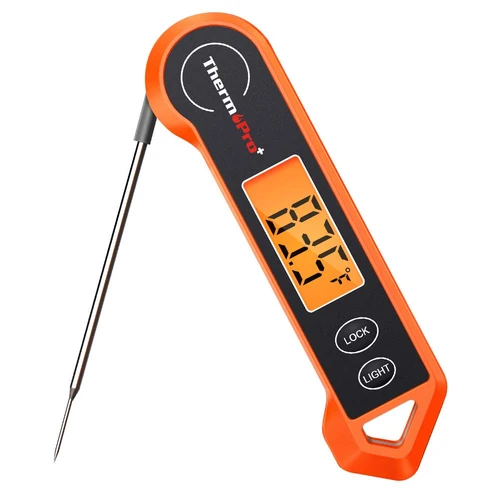
Reheat rice to 165°F throughout — use a food thermometer in the center of the portion. At this temperature, any bacteria that survived refrigeration are killed.
The one-reheat rule: Reheat only the portion you'll eat immediately. Every additional cooling and reheating cycle creates another window for Bacillus cereus to produce toxins during the cooling phase. By the second reheat, both safety and texture have deteriorated.
Signs that rice should not be eaten regardless of storage time:
- Unusual smell (not just "old" or starchy, but sour or chemical)
- Slimy texture
- Visible mold
- Was left at room temperature for more than 2 hours at any point
These signals mean discard immediately — don't reheat and taste-test to decide.
Reheating leftover rice?
The right method depends on how much you have and which device you're using — microwave, rice cooker, or stovetop each needs a slightly different approach.
The Meal Prep Approach That Minimizes Risk
If you batch-cook rice for the week, the safest approach combines refrigerator and freezer storage:
Day 0 (cooking day): Cook a large batch. Cool quickly. Refrigerate 2–3 days' worth in one container. Freeze the remainder in individual portions.
Days 1–3: Use the refrigerated rice.
Days 4–7: Thaw and reheat from frozen as needed.
This approach means you never have refrigerated rice past day 3, you always have a frozen supply when you need it, and you're working within the safety window for both storage methods.
For a family that eats rice 4–5 times per week, this rhythm — cook once, use fresh for 3 days, pull from freezer for the rest — produces the best combination of convenience, quality, and food safety.
The Frugal Angle
Throwing out rice that's past the 4-day limit is genuinely wasteful. The solution isn't to extend the limit — it's to cook and store more strategically so less gets wasted.
Practical adjustments:
Cook closer to what you'll use in 3 days rather than a full week's worth at once. If you batch cook, freeze half immediately rather than refrigerating all of it. Use the rice calculator to dial in how much to cook for your household size so you're not routinely ending up with more than you can use safely.
The rice that gets thrown out after 5 days represents real money. A cup of dry rice expands to about 3 cups cooked — at $0.50–1.00 per pound of quality rice, a wasted portion of leftover rice costs $0.15–0.30 in ingredients plus the cooking energy. Across a year of consistently wasting one portion per week, that's $8–15 — minor individually but a habit worth improving.
Related Reading
- How to Reheat Rice Without Drying It Out — The science of starch retrogradation and the method that actually restores rice texture
- Food Safety Danger Zone Guide — The temperature range where bacteria multiply and how to keep food out of it
- Rice Water Ratio Chart — Complete reference for every rice type and cooking method
- Why Rice Sticks to the Pot — The physics of sticking and how correct water ratio prevents waste
- How to Cook Rice in a Rice Cooker — Timing and settings for batch cooking efficiently