
Suzanne Williamson, RD
Registered dietitian and founder of Frugal Organic Mama. I've been fermenting vegetables for over a decade and have seen Kahm yeast in probably a third of my summer batches — the kitchen is warm, the cucumbers are sugary, and conditions favor yeast. I've thrown out fewer than five batches in ten years, all for actual mold or contamination, never for Kahm.
🥒 Getting the salt ratio right prevents Kahm.
The brine calculator gives exact grams of salt for any jar size — 2% by weight is the target that keeps fermentation on track.
You checked your sauerkraut after a week. There's a white layer on the brine surface. The panic is understandable — you spent days salting, packing, and waiting, and now something has grown in the jar.
In most cases, what you're looking at is Kahm yeast. Your ferment is fine. But the distinction between Kahm yeast and actual mold is one of the most important things to understand in home fermentation, because the responses are completely different: one requires skimming and continuing, the other requires discarding.
This guide covers both, with the specific visual and textural details that let you make the call confidently.
What Kahm Yeast Actually Is
Kahm yeast is not a single organism but a collective term for several wild yeast species — primarily Pichia, Debaryomyces, and Candida species — that are naturally present in the environment and on vegetable surfaces. These yeasts are not pathogenic and do not produce toxins harmful to humans.
During lacto-fermentation, lactic acid bacteria are supposed to dominate. They produce lactic acid, which acidifies the brine and creates an environment hostile to most competing organisms. Kahm yeast forms when conditions temporarily favor the wild yeasts over the bacteria — they colonize the brine surface before the lactic acid bacteria have fully acidified the environment.
Once established at the surface, Kahm forms a visible film because yeast cells reproduce rapidly and accumulate. The film looks alarming because it's visible and unexpected. Microbiologically, it's much less concerning than it appears.
What Kahm is not:
- It is not mold
- It is not dangerous
- It is not a sign that your ferment has failed
- It does not mean the vegetables underneath are unsafe
The Visual and Textural Test
This is the single most important diagnostic skill in home fermentation. When you see surface growth on a ferment, do the following:
Look at the texture from the side of the jar:
Kahm yeast: Completely flat. The film lies against the brine surface like a thin skin or a layer of cream. No visible three-dimensional structure. May have slight wrinkles or irregular edges, but the surface is smooth, not raised.
Mold: Fuzzy. Even early-stage mold has visible filaments that create a soft, three-dimensional texture. You can often see this by holding the jar up to a light source. The fuzz may be fine and barely visible, or dense and obvious.
Look at the color:
Kahm yeast: White, off-white, cream, or very light yellow. Occasionally has a slightly tan or beige tone. Almost never shows distinct colors.
Mold: Can be white in early stages — this is where it overlaps with Kahm, and why texture is the more reliable indicator. As it develops: green, black, blue-gray, or pink. Any color beyond white/cream on surface growth should be treated as mold.
The touch test (only if you've already decided it might be Kahm):
Dip a clean spoon and gently disturb the surface film. Kahm yeast breaks apart and disperses into the brine. Mold typically holds its structure or comes off in pieces rather than dissolving.
Quick Decision Guide
The Pink Exception: Not Kahm, Not Mold
Pink or red discoloration deserves special attention because it's the one appearance that indicates something more serious than either Kahm or typical mold.
Pink coloration in fermented vegetables — particularly in the brine, on the cabbage, or as a surface film — is associated with Serratia marcescens contamination, a gram-negative bacterium that produces a distinctive red pigment. This is not a normal part of fermentation and is not safe to eat around.
Serratia marcescens is an opportunistic pathogen. In healthy adults it rarely causes serious illness, but in young children, elderly individuals, or immunocompromised people it can be a genuine health risk. The conservative guidance is to discard any ferment with pink discoloration without tasting it.
Note: red cabbage ferments will turn the brine purple or pink from the anthocyanins in the cabbage — this is completely normal and unrelated to contamination. The distinction is that this coloring comes from the cabbage itself from the start, not from a later developing growth or film.
Why Kahm Forms: The Conditions
Understanding why Kahm develops lets you prevent it or at least recognize when your conditions are more likely to produce it.
Salt concentration below 2% by weight
This is the most common cause. Insufficient salt means the brine acidifies more slowly, giving wild yeast a longer window to establish at the surface before lactic acid bacteria produce enough acid to inhibit them. The 2% brine target (by weight, not volume) is not arbitrary — it's the concentration at which lactic acid bacteria have a reliable competitive advantage.
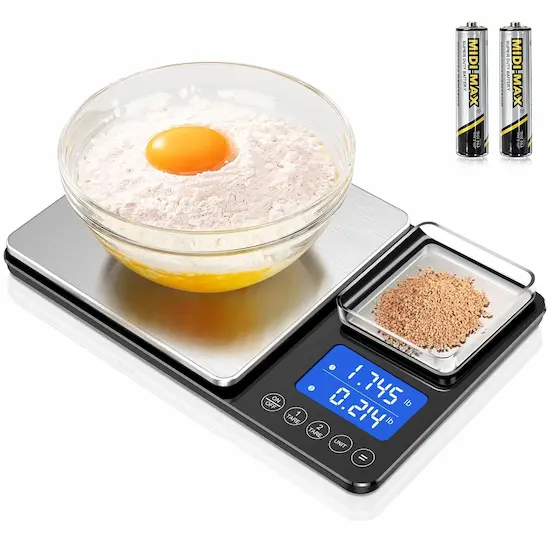
Volume measurements of salt are unreliable because different salt types have very different densities — 1 tablespoon of table salt weighs 18g, but 1 tablespoon of Diamond Crystal kosher salt weighs only 9g. At the same tablespoon measurement, you could be at 1% brine or 2% brine depending on the salt. Use a scale and measure by weight.
Temperature above 75°F
Lacto-fermentation works best between 65–75°F. Above 75°F, fermentation moves faster overall but the balance shifts toward yeast activity. Summer kitchens are the most common cause of Kahm. Moving the jar to a cooler location — a basement, a cool closet, or even near the floor — makes a meaningful difference.
Vegetables above the brine surface
Oxygen at the surface promotes yeast and mold. Any vegetable piece that floats above the brine is an invitation for surface growth. Keep everything submerged using a fermentation weight, a zip-lock bag filled with brine, or a cabbage leaf folded over the top.
High-sugar vegetables
Freshly harvested corn, sweet peppers, and very ripe cucumbers have higher sugar content that feeds yeast more readily. This doesn't mean you can't ferment them — just that these batches are more likely to develop Kahm, especially in warm conditions.
What to Do When You Find Kahm
Step 1: Remove it. Use a clean spoon to skim the Kahm film from the brine surface. You don't need to get every trace — just remove the bulk of it. The brine will be slightly cloudy after skimming; this is normal.
Step 2: Check the vegetables. Are they fully submerged? If any pieces have floated above the brine, press them back down or add more brine (made at 2% salt by weight) to cover.
Step 3: Assess the smell. The ferment should smell sour, tangy, and like the vegetable you're fermenting. If it smells properly sour, it's fine. If it smells putrid, chemical, or significantly off beyond normal sourness, trust your nose.
Step 4: Taste the vegetables (optional). If the smell is acceptable, taste a small piece of vegetable from below the brine. It should taste sour and like itself. Kahm yeast occasionally adds slight bitterness or unusual off-notes — if the flavor is acceptable, the ferment is fine. If it tastes wrong in a way that's not just "very sour," use your judgment.
Step 5: Continue or refrigerate. If the ferment is at your desired sourness level, refrigerate it — cold temperatures will halt Kahm formation. If it needs more time, continue at room temperature but check daily and skim any new Kahm that forms.
When to Actually Discard
Discard the batch when:
- Any fuzzy growth is present — any three-dimensional, filamentous texture means mold regardless of color
- Pink, red, or orange discoloration appears anywhere in the jar
- The smell is genuinely putrid — not just very sour or acidic, but rotting or chemically wrong
- The vegetables below the brine are soft and slimy beyond normal lacto-fermented texture
- You can't confidently distinguish Kahm from mold — when in doubt, discard. The batch represents the cost of ingredients and time, not food safety. Starting a new batch is always the right call when something is uncertain.
I've thrown out batches when I wasn't sure. The cost of a jar of cabbage and a week's waiting is much less than eating something questionable.
Starting a new batch after a Kahm problem?
Measure the salt by weight this time — the calculator gives you exact grams for your jar size so the concentration is right from the start.
Prevention: Getting the Conditions Right
The most reliable Kahm prevention combines three things:
1. Salt by weight, not volume
Use the brine calculator or a kitchen scale. 2% salt by weight of the total brine (water + salt). This is the concentration that reliably gives lactic acid bacteria the advantage from the start.
2. Keep everything submerged
A fermentation weight makes this automatic. If you don't have one, a small zip-lock bag filled with 2% brine works well — it conforms to the jar shape and can be removed without disturbing the ferment. A large outer cabbage leaf folded over the contents is the traditional low-tech solution.
3. Temperature control
65–75°F is ideal. If your kitchen runs warm in summer, find the coolest spot in the house — even a 5-degree difference changes Kahm likelihood significantly. A basement, a cool pantry, or fermenting in early morning before the kitchen heats up all help.
4. Water source
Chlorinated tap water can inhibit lactic acid bacteria while allowing more chlorine-tolerant yeasts to dominate. Use filtered water, well water, or tap water that has sat in an open container for an hour (chlorine off-gasses at room temperature).
The Flavor Impact of Kahm
Kahm yeast is harmless, but it's not flavorless. Yeasts produce various flavor compounds as metabolic byproducts, including esters and aldehydes that can add:
- Slight bitterness
- A "yeasty" note that doesn't belong in a clean lacto-ferment
- In prolonged cases, an almost bread-like or funky quality
Whether this is detectable depends on how long the Kahm was present and how thick it grew. I've had batches with 2–3 days of light Kahm that tasted completely normal after skimming. I've also had a summer batch of dill pickles that developed dense Kahm over a week in an 80°F kitchen — the pickles were safe but had a noticeable off-flavor that I found unpleasant.
Skimming early, before Kahm has had weeks to influence the brine, minimizes flavor impact. Checking your ferments every 2–3 days and skimming any Kahm promptly produces a cleaner product than letting it accumulate.
Related Reading
- How to Make Sauerkraut at Home — Complete method with salt ratios and fermentation timeline
- Sauerkraut Troubleshooting — Full diagnostic guide for common fermentation problems beyond surface growth
- How Long Do Pickles Last? — Storage timelines for lacto-fermented, canned, and refrigerator pickles
- Lacto-Fermentation vs Vinegar Pickling — Why the two methods produce fundamentally different results
- Science of Pickling Salt Density — Why measuring salt by weight matters for fermentation safety