
Suzanne Williamson, RD
Registered dietitian and founder of Frugal Organic Mama. I buy basmati rice in large bags and cook it several times a week. The package instructions have been wrong every single time, so I tested the ratios repeatedly before settling on the numbers in this guide.
Get the exact water amount for your batch size.
The rice calculator adjusts for basmati specifically - white or brown, stovetop, rice cooker, or Instant Pot.
Basmati rice has one of the most misleading packages in the grocery store. The instructions often recommend more water than the rice needs, which pushes the finished pot toward soft, clumped grains instead of the dry, separate texture basmati is known for.
The fix is simple once you understand why basmati behaves differently from other rice varieties.
Why Basmati Needs Less Water Than the Package Says
All rice is mostly starch, but the ratio of two starches - amylose and amylopectin - changes how each variety cooks.
Amylopectin creates stickier, more cohesive rice. Jasmine rice and short-grain sushi rice lean in that direction, which is why they naturally cling.
Amylose creates firmer, more separate grains. Basmati is especially high in amylose, which is what gives properly cooked basmati its dry, elongated texture.
The cooking implication is straightforward: high-amylose rice does not swell and gelatinize as dramatically as higher-amylopectin rice. Add more water than needed and the extra steam keeps softening the grain until the texture turns mushy.
That is why basmati often wants less water than the back-of-bag instructions suggest.
Ratio Reference: All Methods
| Method | White basmati | Brown basmati | Cook time |
|---|---|---|---|
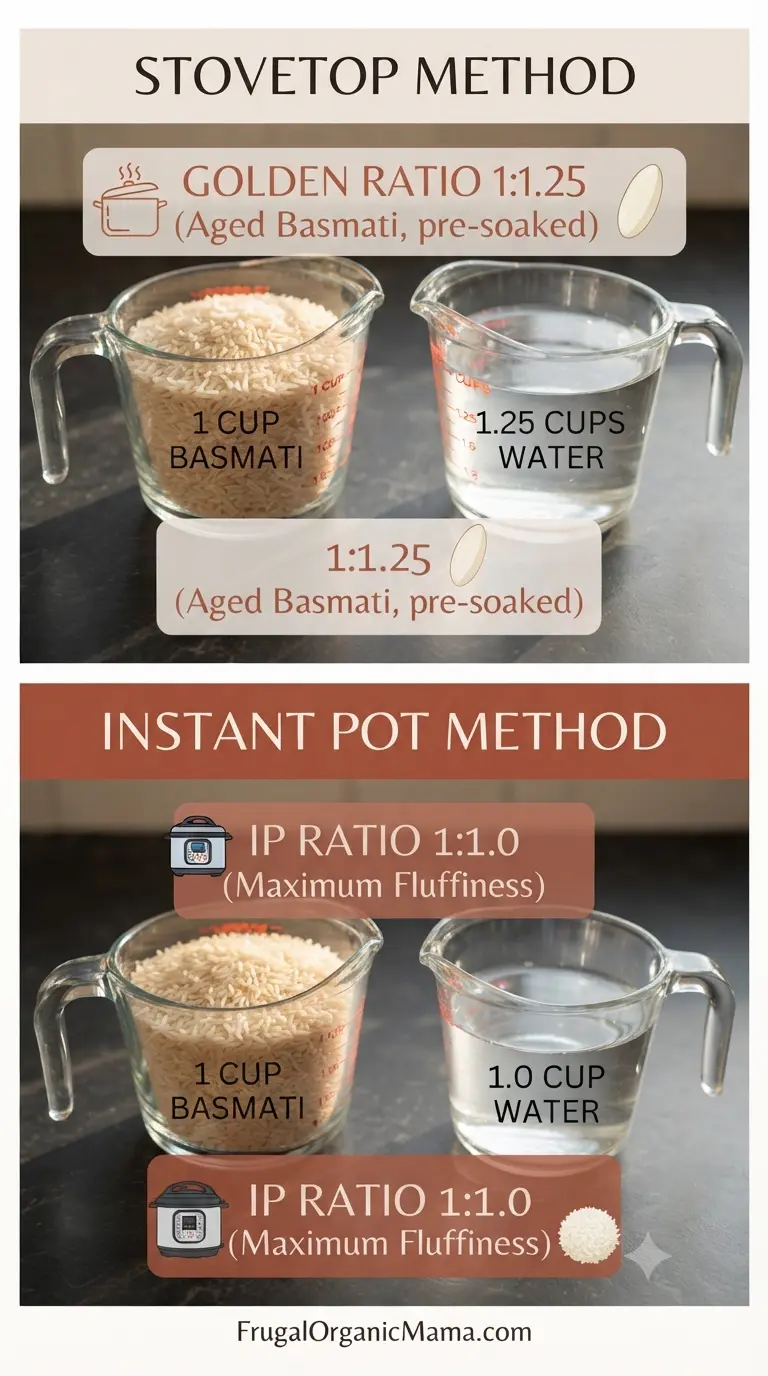
| Stovetop (unsoaked) | 1 : 1.5 | 1 : 2 | 15 min + 10 min rest |
| Stovetop (soaked) | 1 : 1.25 | 1 : 1.75 | 12 min white / 25 min brown + 10 min rest |
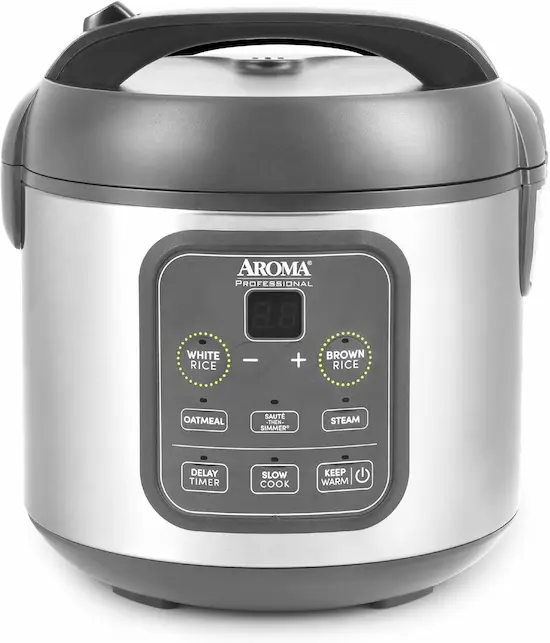
| Rice cooker | Use white rice line | Use brown rice line | Machine cycle |
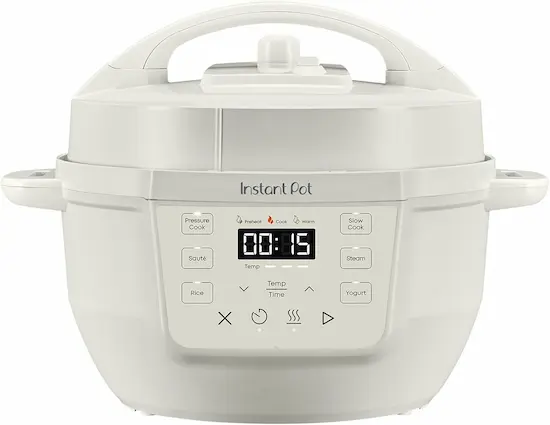
| Instant Pot | 1 : 1 | 1 : 1.15 | 4 min HP + Natural 10 min / 22 min HP + Full Natural |
| Microwave | 1 : 1.75 | 1 : 2.25 | 12 min at 70% power, covered |
My Testing Results
I tested white basmati at 1:1.25, 1:1.5, 1:1.75, and 1:2 with the same pot, burner, and timing.
1:1.25: Slightly undercooked at the center of some grains. Acceptable if you extend the rest, but not forgiving enough for everyday use.
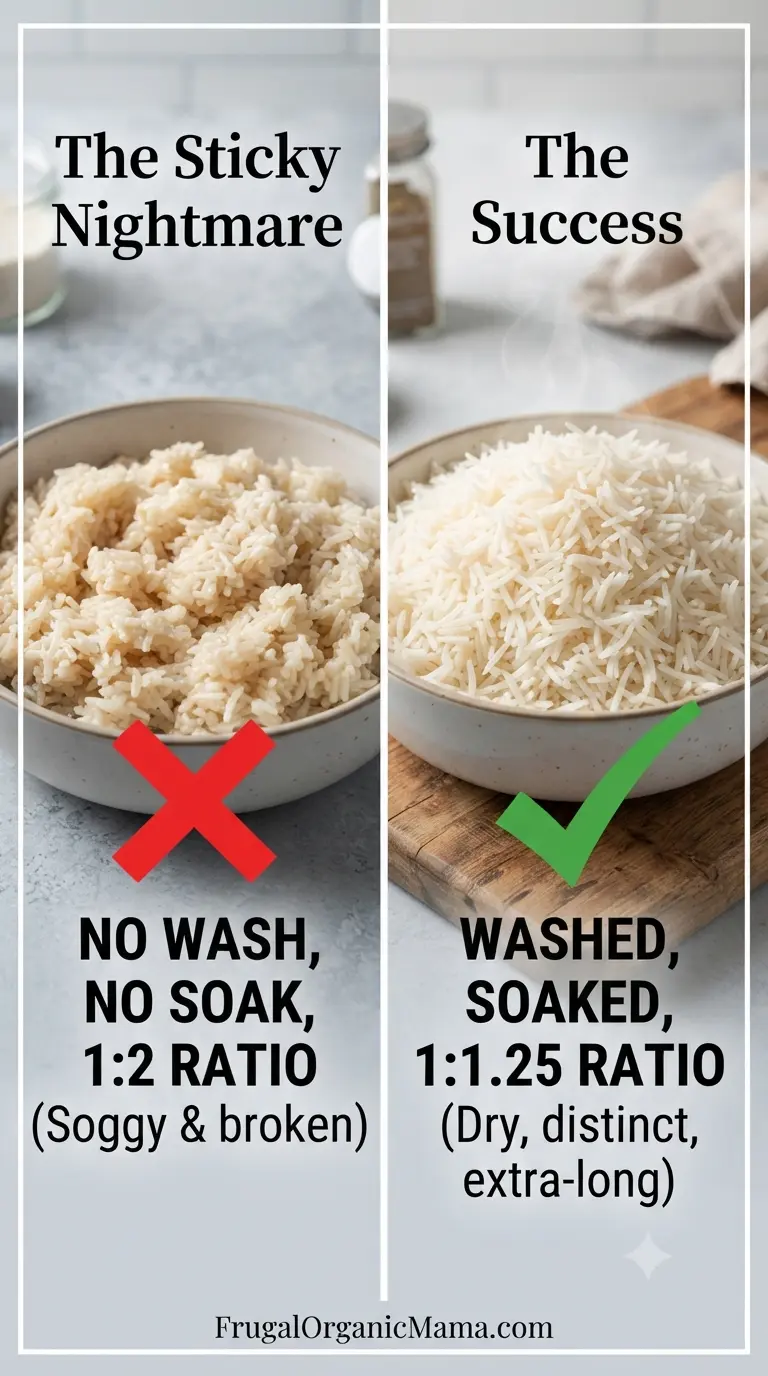
1:1.5: The sweet spot. Separate grains, clear elongation, and a firmer bite.
1:1.75: Softer than I want from basmati. The grains start losing the distinct texture that justifies buying basmati in the first place.
1:2: Too soft and noticeably clumpier. This is the version that makes people think basmati is overrated.
The sensory signal I watch for is simple: when you fluff properly cooked basmati with a fork, the grains should separate easily and look stretched. If they bunch up as you lift, there was too much water.
The Soaking Step: What It Actually Does
Soaking basmati is traditional in South Asian cooking, but it also makes physical sense.
Dry basmati has a tight starch structure. When dry grains hit boiling water, the outside hydrates faster than the center. That unevenness is one reason some grains end up slightly soft outside while still firmer in the middle.
Soaking gives the grain a head start. With more even hydration, basmati can elongate more completely during cooking. In my testing, well-cooked basmati can extend roughly 60-70% in length, and soaking helps you get closer to that result.
Practical soaking method: Rinse the rice until the water runs mostly clear - usually 2-3 rinses - then cover with cold water and soak for 20-30 minutes. Drain well. After soaking, reduce the stovetop water from 1:1.5 to 1:1.25.
I soak when presentation matters - biryani, pilaf, dinner guests. I skip it when I just need a weeknight rice bowl on the table.
Stovetop Method: Step by Step
1. Rinse until the water runs mostly clear. Basmati carries enough surface starch that this step noticeably helps separation.
2. Optional soak for 20-30 minutes in cold water, then drain.
3. Combine rice and cold water in a heavy-bottomed pot. Use 1:1.5 for unsoaked rice and 1:1.25 for soaked rice.
4. Bring to a boil over medium-high heat, uncovered.
5. The moment it boils: reduce to the lowest heat setting, cover tightly, and leave it alone.
6. Cook for 15 minutes unsoaked or 12 minutes soaked.
7. Rest off heat for 10 minutes with the lid on. This is where the final texture sets.
8. Fluff with a fork rather than a spoon so you separate the grains instead of crushing them.
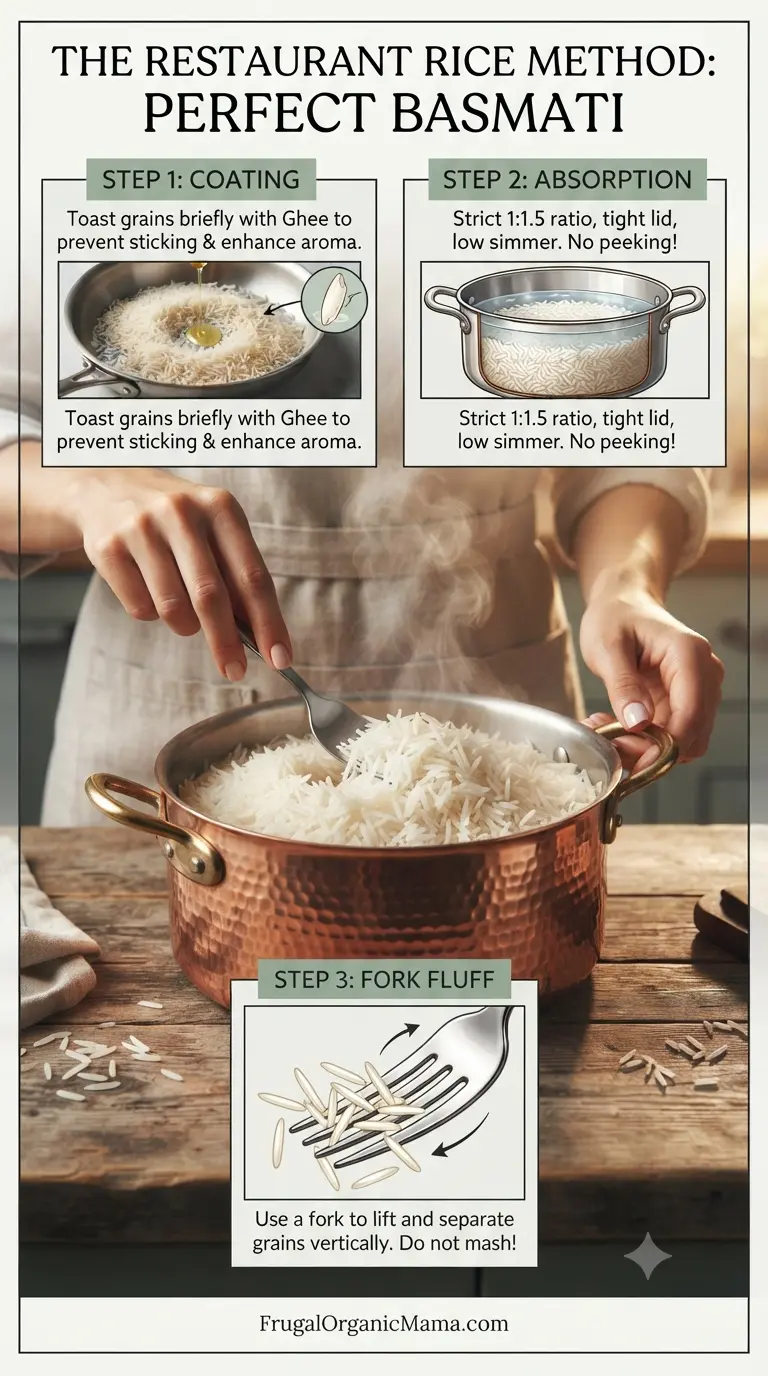
When the ratio is right, the surface looks dry and slightly pitted after the rest. If moisture is still pooling on top, the next batch needs a little less water.
Brown Basmati: Different Rules
Brown basmati shares basmati's higher amylose profile, but the bran layer changes the cooking math. Water has to move through that outer layer before the center softens, so brown basmati needs both more water and more time.
The shared stovetop baseline is 1:2. I have tested lower, and 1:1.75 without soaking is too firm for most people.
Brown basmati benefits more from soaking than white basmati. Soak it for 60-120 minutes if you can. That usually trims about 10 minutes off the stovetop cook and gives a more even texture.
Brown basmati stovetop with soaking: 1:1.75 ratio, about 25 minutes at low simmer, then 10 minutes rest.
Brown basmati stovetop without soaking: 1:2 ratio, 35-40 minutes at low simmer, then 10 minutes rest.
The Instant Pot Difference
The Instant Pot changes the ratio because almost no water escapes. On the stovetop, part of your water budget is there to cover evaporation. Under pressure, nearly all of that water stays in the pot.
White basmati Instant Pot: 1:1 ratio, rinse first, 4 minutes on high pressure, then Natural 10 min.
Brown basmati Instant Pot: 1:1.15 ratio, 22 minutes on high pressure, then Full Natural.
The first time I made basmati in the Instant Pot, I used my stovetop ratio and got wet, gummy rice. Dropping to 1:1 fixed it immediately.
Buying Basmati: What Matters
Aged basmati versus fresh: High-quality basmati is often aged for 1-2 years after harvest. That drying period helps produce longer, more separate grains.
Indian brands versus domestic: Brands like Royal, Daawat, Lal Qilla, and India Gate are processed for classic basmati texture and aroma. Some domestic "basmati-style" products are blends or different long-grain types entirely.
Where to buy: South Asian grocery stores usually have better turnover, better variety, and better prices for basmati than mainstream supermarkets.
Storage: Basmati keeps well in a sealed container for a long time. If an older batch starts cooking slightly firm, add about 2 tablespoons of extra water per cup and retest.
Cooking for a crowd or scaling a recipe?
The rice calculator handles any batch size for basmati - white or brown, any cooking method, with exact water amounts.
Related Reading
- Rice Water Ratio Chart - Complete reference for every rice type, including jasmine, brown, short-grain, and sushi rice
- Jasmine Rice Water Ratio - Why jasmine and basmati need different ratios despite both being long-grain
- Should You Wash or Soak Rice? - When rinsing and soaking helps and when it changes the ratio
- Does Rice Age Matter? - How rice age affects water absorption, especially for imported aromatic rice
- Rice Cooker Water Lines vs Measuring Cups - Why the lines in your rice cooker do not match standard measuring cup ratios